
Wild West Pioneers Trade Routes Across the Frontier
World-map caravans, warehouse hauls, gold camps, and a railroad that waits.
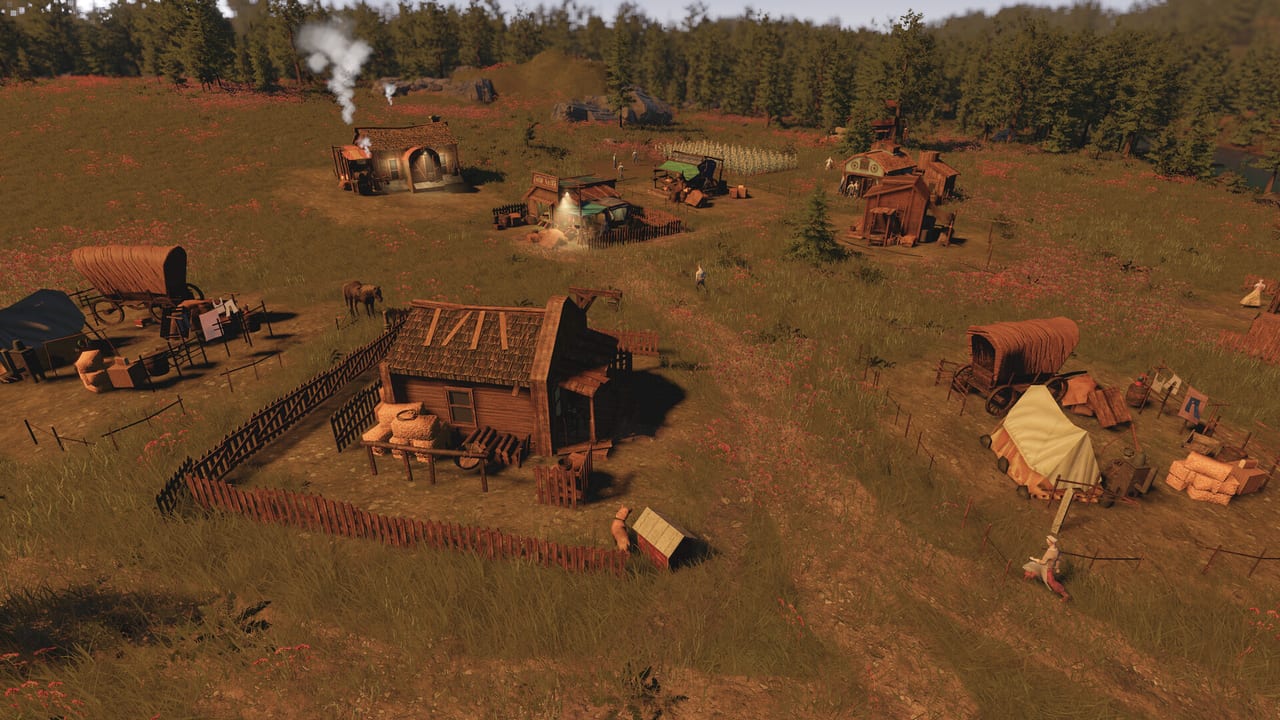
Wild West Pioneers stops being a single postcard the moment the world map interconnects settlements. Store copy is blunt: send settlers into uncharted territory, found new villages, then set up trade routes so resources can be exchanged. This page is the freight brief — caravan tickets, warehouse radius as the local half of that loop, when a second town is allowed to exist, and why a railroad is a later Early Access sketch. Scout clicks live on the scout expedition flow. Chain math inside one creek lives on warehouse and bourbon chains.
EmpireCraft Studios (Poland) builds it; Toplitz Productions (Germany) publishes it. The game is single-player on Windows PC, with Early Access scheduled for 25 September 2026 on Steam, GOG, and the Epic Games Store. Steam listed a playable demo in February 2026 around Next Fest. An open playtest window runs 2–14 September 2026 from 08:00 UTC with a two-hour session cap in press notes. Neither slice is a continent of rails. Treat Dust Creek as the first node, not as a finished network.
Read the caravan HUD before you found a second hall
Screenshots of the world map show freight labels such as EXIT POST SOUTH CARAVAN 1 toward Dust Creek. That is not flavor text. It is a wagon heading at a named hub. When that ticket exists, the first town has become a destination that can receive boards, food, or people. If the ticket exists and Dust Creek cannot spare grain, you printed a route onto two starving camps.
The strategic map is how you plan that progress. Store language covers expeditions, trading outposts, and wagons with explorers eager to found new settlements. Do not confuse a scout pin with a loaded caravan. A scout marks a ghost town, a merchant, a stranger, a treasure, or a gold patch. A caravan moves freight after two halls exist. Early Access scope notes keep multiple biomes and interconnected settlements in the paid-window promise, not in the first-hour demo.
Warehouse radius is the first trade route
Before the camera is a continent, trade is a walk. Warehouses store goods and assign haulers to each connected building. Marked zones around the warehouse tell you the walking tax: closer means fewer people. Roads help haulers pick a path. They do not shrink a bad radius. An unstaffed warehouse is a shed with a sign. Assign pioneers until the connection indicators stop complaining, then add gatherers.
A logger cabin, hunter cabin, sawmill, and food shop only feed a later caravan if they already feed the first street. Gathering without storage is, in the tutorial’s own words, pointless. If you plan to ship boards west, finish boards at home. Move a distant cabin with the building-panel control instead of hiring a parade. That local discipline is the only reason a south post later has something worth carrying.
Second town only after people and grain can be spared
Do not found a second settlement because the map looks empty. Found it when the first food shop issues rations and a few families can leave without emptying the warehouse inner ring. Official copy warns you not to leave anybody behind or it will cost you dearly. A settler expedition that ships your last happy workers to a desert pin is how you own two failing Town Halls.
Demo footage ends on that test. Scouts find gold deposits and the game tells you to send settlers there to establish a mining camp. The click path is not “plant a hall on the pin.” Build a settler base, form a group, then launch a settler expedition that can transport selected resources — money, food, people. If you still need the survey-versus-colonize distinction, return to the scout expedition flow. If you still need who is happy enough to send, return to settler needs and leaving.
When the second hall drops, repeat the first-town triangle: water overlay, wildlife overlay, warehouse inner ring, then beds. Appointing different functions per town is part of the announced civic layer; mayor and sheriff appointments is the page for badges. Freight still needs haulers. A mining camp with no road back to Dust Creek is a postcard of ore.
Merchants, strangers, treasures — and the railroad later
Scout points of interest in demo footage and store copy include ghost towns, camps, abandoned mines, gold, merchants, strangers, and treasures. Merchants and treasures feed the gold purse. Gold is the expedition and trade budget, not a reason to strip the warehouse crew. Strangers are story and risk; they are not a second production chain. Bring the party home before you spend the purse on another pin.
A railroad is a later Early Access goal, named beside trade routes and new means of transportation. Store text asks you to prepare the land for the coming railroad network. That is destination language. It is not a demo unlock and not a day-one factory. If a trailer overlays track on a concept shot, treat it as art. Rank the plots you can actually place on the industry building ranks and the confirmed building roster. No rail yard sits on those lists yet.
Caravans on the world map are the mid-game freight layer once a second town exists. Until then, the only route that matters is hall to warehouse to cabin to shop. Skip-the-night to watch one full haul day. If morning gold looks healthy and rations do not, you read the wrong number.
English has full audio; French, German, Spanish (Spain), Polish, Simplified Chinese, and Russian cover interface and subtitles. This wiki publishes English, French, German, and Spanish. Voice work in current builds uses real actors. Wishlist Steam app 3222640 if you want map news as the 25 September 2026 window gets closer. A public price has not been posted.
When the world map later prints EXIT POST SOUTH CARAVAN toward Dust Creek, that label is a receipt: the first town became a node that can spare grain. Do not wait for rails to make that true. Staff the warehouse, keep the south post honest, and let the railroad stay a later Early Access sketch until two camps can actually miss a wagon without packing their bags.
Frequently Asked Questions
Quick answers for settlers heading west.
What does EXIT POST SOUTH CARAVAN toward Dust Creek mean?
It is a world-map freight ticket, not a decoration. Footage shows that label as a caravan heading at Dust Creek. Treat the first town as a node that must be able to receive or send grain before you print more routes.
When should I found a second settlement?
Only after the first food shop issues rations and the warehouse can spare people and grain. A settler expedition that empties Dust Creek founds two hungry camps. Layout rules for the next hall sit on the Dust Creek founding checklist.
Is the railroad a day-one unlock?
No. A railroad is a later Early Access goal described beside trade routes and new transport. Demo play focuses on one town, scouts, and a first settler expedition. Track the larger plan on Early Access scope notes.
How do caravans relate to warehouse haulers?
Haulers are the local half of trade. Warehouse radius, roads, and assigned workers move logs and rations inside one town. Caravans move freight after two halls exist. An empty warehouse cannot load a south post.
What happens when scouts find gold deposits?
Demo footage treats that pin as a reason to build a settler base and found a mining camp. Scouts survey; settler expeditions colonize and can carry selected resources. See the scout expedition flow for the click path.
Do merchants and strangers count as trade routes?
They are scout points of interest. Merchants and treasures feed gold. Strangers are story and risk. They are not a substitute for a staffed warehouse or a caravan between two working towns.